Experiencing sudden numbness on the right side of the face is a significant signal from your body that demands your immediate and calm attention. In this guide, I will break down the potential causes and red flags of this condition, providing you with the reliable information you need to navigate your next steps with confidence and clarity. By understanding exactly what to look for and how to prepare for a clinical assessment, you can take control of your health and ensure you are taking the right action for your wellbeing.
The most important thing to understand about numbness on the right side of the face is that it is a symptom, not a diagnosis, which can range from benign stress-induced tingling to serious medical emergencies requiring immediate intervention. While it is often caused by nerve inflammation, viral infections, or migraine auras, you must treat sudden, unexplained facial sensory loss as a potential sign of a stroke or neurological event until proven otherwise by a medical professional. Your priority is to rule out life-threatening conditions first, then systematically investigate the underlying mechanical or physiological triggers with the help of your GP or a neurologist.
Numbness on right side of face
Immediate Medical Attention
Experiencing a sudden loss of sensation in your face should be treated as a potential medical emergency. Should your symptoms emerge rapidly, or if they are coupled with motor weakness on one side of your body, difficulty speaking clearly, mental disorientation, or a sharp, intense headache, you must dial 999 (or the local emergency services number) without delay.
Potential Underlying Causes
A loss of feeling on the right side of your face may indicate an underlying health issue. Notable conditions that can lead to these symptoms include:
- Multiple Sclerosis (MS)
- Varicella-zoster virus infection, commonly known as shingles
- Cerebrovascular accident (stroke)
- Transient Ischemic Attack (TIA)
- Bell’s Palsy
- Presence of a tumour
Recognising Warning Signs
Health organisations often advocate for the ‘F.A.S.T’ acronym to help individuals identify the common indicators of a stroke. This memory aid focuses on facial drooping, arm weakness, and speech difficulties.
Non-Emergency Considerations
If your symptoms have developed slowly or are occurring in the absence of stroke-related warning flags, there may be less urgent explanations for the discomfort. Regardless of the perceived severity, it is essential to arrange a consultation with a registered medical practitioner. A doctor can conduct a proper examination to identify the root cause and advise on the most suitable course of management or treatment.
Sensations and Nerve-Related Factors
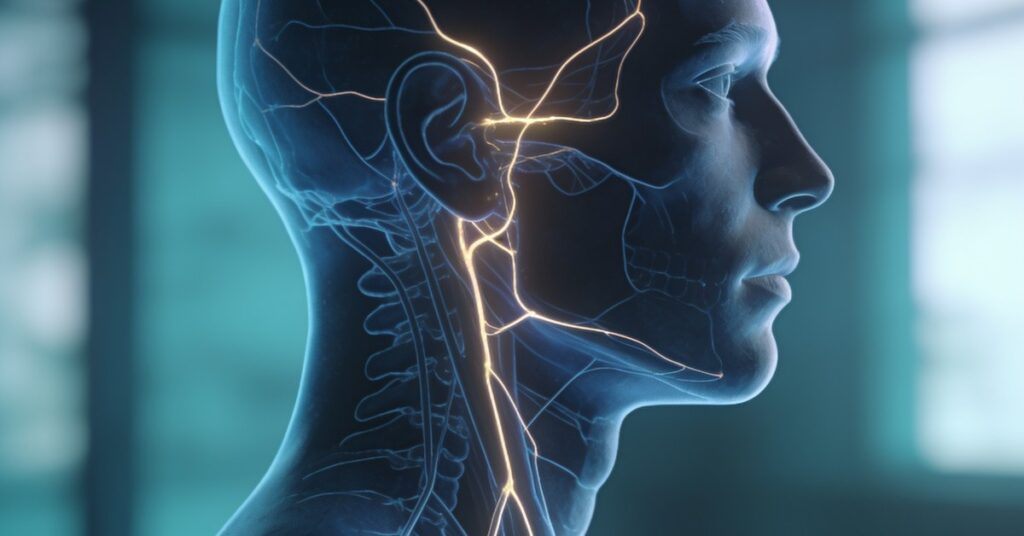
Some individuals report both tingling and numbness in the facial region. In certain clinical contexts, these sensations may be linked to the trigeminal nerve, which can be influenced by muscular tension in the head and neck area. It is important to remember that facial paraesthesia can stem from a wide variety of factors, ranging from temporary compression to chronic conditions.
General Medical Disclaimer
The information provided here is for educational purposes only and does not serve as a medical diagnosis or professional consultation. Always consult with a qualified healthcare provider regarding any persistent or concerning neurological symptoms.
When to Seek Urgent Medical Attention for Facial Numbness
You must seek immediate emergency medical care by calling 999 in the UK or 911 in the US if your numbness on the right side of the face begins suddenly or is accompanied by signs of a stroke. Ever found yourself in a similar spot, wondering if it is just a „funny turn” or something more serious? Use this checklist to determine if you need to act right now:
- Sudden facial drooping or loss of muscle control.
- Slurred speech or an inability to form words.
- Sudden, severe headache or vision changes.
- Weakness or numbness in your arms or legs.
- Numbness occurring immediately after a head injury.
For less severe scenarios, you should schedule a formal medical appointment if the symptom duration persists for more than 24 to 48 hours, or if you are experiencing recurring, intermittent episodes. Even if the feeling is mild, having a documented history of these events is vital for your doctor to build an accurate picture of your long-term health.
Common Physical Causes Behind Numbness on the Right Side of Face
Facial numbness is frequently caused by a disruption in the nerves or blood supply. To help you distinguish between potential triggers during your consultation, I have put together this comparison table based on common clinical presentations:
| Condition | Typical Presentation |
|---|---|
| Bell’s Palsy | One-sided weakness, often with sensory changes. |
| Trigeminal Neuralgia | Chronic, sharp pain or numbness in nerve pathways. |
| Systemic Neuropathy | Usually linked to Diabetes or autoimmune issues. |
| Migraine Aura | Temporary, often follows a specific sensory progression. |
The Link Between Migraines and Sensory Auras
Facial numbness can be a characteristic sign of a migraine with aura, where sensory symptoms typically develop over 5 to 20 minutes and resolve completely within an hour. A rare but notable variation is the Hemiplegic Migraine, which is distinctly associated with one-sided muscle weakness and facial numbness. These episodes can be frightening, but they are often genetically linked; Familial Hemiplegic Migraine, for instance, has three distinct subtypes associated with specific gene changes, while the sporadic form occurs without a known family history.
If you find that your sensory aura often begins in your fingertips before moving toward your face, this progression is a classic hallmark of a migraine-related event. While these episodes are generally temporary, they require a proper diagnosis to distinguish them from other neurological issues. Some medical professionals may prescribe epilepsy medication to help manage the frequency and intensity of hemiplegic migraines. If you are struggling to find local support, the NHS Service Finder is a practical tool to locate a GP or specialist who can help you map out a long-term management plan.
Can Anxiety Trigger Numbness on the Right Side of Face
Anxiety can absolutely cause facial numbness and tingling, as these are recognised physical symptoms of panic attacks and intense anxiety flares. When you are in a state of high stress, your body triggers vasoconstriction, which narrows your blood vessels and can reduce blood flow to the skin of your face. Dealing with massive stress after a tough day at work is common, but it is important to give yourself time to decompress before it manifests physically.
Important: If you are experiencing this, you should book an appointment with a neurologist to definitively rule out other physical causes. Once a medical professional has cleared you of underlying pathology, you can begin to focus on lifestyle management, such as meditation or progressive muscle relaxation, to lower your baseline stress levels and prevent these symptoms from returning.
Diagnostic Pathways and Treatment Approaches
The diagnosis and treatment of facial numbness depend entirely on the underlying cause, ranging from short-term medication to targeted physical rehabilitation. If you are preparing for your first appointment, here is a simple process to ensure you get the best out of your visit:
- Keep a log of when the numbness started and how long it lasted.
- Note any other symptoms like headaches or vision changes.
- Ask your doctor if a Stellate Ganglion Block or other diagnostic imaging is appropriate for your specific case.
- Discuss potential lifestyle changes, including physical therapy for nerve recovery.
Recovery often involves more than just medication; physical therapy is a cornerstone of treating facial nerve disorders. If you are dealing with Bell’s Palsy specifically, you must also be diligent about eye care, oral hygiene, and facial exercises, which are essential for long-term recovery. It is encouraging to note that 85% of people recover from Bell’s Palsy with appropriate care.
Is Bell’s Palsy Associated with Right-Side Facial Numbness
Bell’s Palsy is indeed associated with subjective numbness and sensory changes on the affected side of the face, even though it is primarily a condition of motor weakness. This occurs because the condition involves inflammation of the 7th cranial nerve, which runs in very close proximity to the Trigeminal Nerve—the primary nerve responsible for facial sensation. While Bell’s Palsy is classified as an idiopathic facial palsy of the peripheral type and typically affects only one side, it is well-documented in clinical literature that patients often report ipsilateral numbness alongside weakness.
The typical age of onset for this condition is around 40, though it most frequently affects individuals between the ages of 15 and 60. Because it is a diagnosis of exclusion, you should never self-diagnose based on the assumption that it is „just” Bell’s Palsy. If you are experiencing one-sided facial numbness, treat it as a significant event that requires a professional examination to confirm the diagnosis and initiate the correct rehabilitation steps.
Frequently Asked Questions
Can a sinus infection cause numbness on the right side of the face?
Yes, a severe sinus infection can put pressure on facial nerves, leading to temporary numbness or tingling sensations. If the numbness persists after your infection clears, you should consult your GP for a further neurological assessment.
What is the role of the Trigeminal Nerve in facial sensation?
The Trigeminal Nerve is the primary nerve responsible for transmitting sensory information from your face to your brain. Any structural compression or inflammation affecting this nerve pathway can directly result in feelings of numbness or pins-and-needles.
How does Diabetes relate to facial sensory changes?
Diabetes can lead to diabetic neuropathy, a condition where high blood sugar levels cause damage to the peripheral nerves throughout the body. While more common in the extremities, this nerve damage can occasionally affect the nerves in the face, causing sensory disturbances.
Are there specific facial exercises to help with recovery?
Yes, facial rehabilitation exercises can help maintain muscle tone and improve nerve signaling during recovery from conditions like Bell’s Palsy. You should always work with a qualified physical therapist to ensure these exercises are performed correctly without overstraining the affected muscles.
Prioritise a professional clinical assessment if your symptoms persist, as getting a timely diagnosis is the most effective way to safeguard your long-term health. You are doing the right thing by staying vigilant, so trust your instincts and reach out to a professional whenever your body sends you a persistent warning sign.