Staying properly hydrated is a cornerstone of physical performance and mental clarity, yet many of us find the taste of plain water simply too boring to maintain a consistent daily intake. In this guide, I will break down the reality behind commercial flavoured waters, helping you distinguish between healthy hydration and hidden dietary pitfalls so you can make informed choices for your body. By the end, you will know exactly how to spot quality ingredients and why preparing your own infusions is the ultimate strategy for your health and fitness goals.
To answer the core question: is flavoured water good for you? The short answer is that it is generally not as healthy as plain water, primarily because commercial versions often contain hidden sugars, synthetic sweeteners, and acids that can compromise your dental and metabolic health. While it can serve as a bridge for the 20% of Americans who struggle to drink enough plain water, the trade-off is often a cocktail of preservatives and chemicals. If you are serious about your physical development, you should view most store-bought flavoured waters as an occasional alternative rather than a primary hydration source.
Is flavoured water good for you?
The Health Impact of Flavoured Water
Flavoured water can serve as a beneficial hydration aid, particularly for individuals who struggle to consume enough plain water or those looking to reduce their intake of sugary soft drinks. Nevertheless, it is crucial to recognise that not all varieties are inherently healthy. To maximise the advantages while avoiding potential negatives, it is essential to scrutinise the nutritional information on the packaging.
While plain water remains the gold standard for hydration, it can be unappealing to some palates. As indicated by reports, a significant portion of the population dislikes the taste of plain water, leading many to opt for flavoured alternatives instead.
3 Key Benefits of Flavoured Water
- Encourages Higher Fluid Intake: Since the vast majority of flavoured waters consist of over 99% water, they are effective at maintaining bodily hydration levels.
- A Healthy Substitute: It provides a viable transition for those attempting to move away from high-calorie, sugary beverages.
- Customised Hydration: It offers variety for those who find the lack of flavour in plain water monotonous.
Addressing Misconceptions
It is a common misconception that all flavoured water is detrimental to health. Whilst certain brands are laden with added sugars, artificial sweeteners, or preservatives, many healthier options exist. The key is in the selection process.
The Good
When chosen wisely, flavoured water helps improve overall fluid intake, which is vital for metabolic processes, skin health, and cognitive function. It represents a practical solution for those who find plain water unpalatable.
What to Watch Out For
Consumers should be mindful of ingredients that might negate the health benefits. Certain flavourings, particularly those with citrus infusions, are notably acidic due to the presence of citric acid. Prolonged or frequent consumption of highly acidic drinks can lead to the erosion of tooth enamel over time. Furthermore, one should be wary of hidden sugars and excessive artificial additives.
How to Choose the Best Option
Always inspect the nutrition label carefully before making a purchase. Opt for products that contain either zero or negligible amounts of sugar, use natural fruit-based essences, and contain as few artificial ingredients as possible. For professional advice on maintaining a balanced diet and making informed nutritional decisions, the NHS Eatwell Guide serves as an excellent resource.
Varieties of Water Enhancement
Water flavourings are available in various formats, including liquids, powders, and effervescent tablets. These can be adjusted to suit personal taste preferences. Depending on the specific additives used, these products can be a superior choice compared to sugary alternatives, provided they are selected with health in mind.
Understanding the Impact of Artificial Sweeteners on Your Well-being
Artificial sweeteners in flavoured water, such as aspartame, acesulfame K (Ace-K), and sucralose, are far from neutral and can actively disrupt your metabolic and digestive health. Regular consumption of these beverages is linked to a significantly greater risk of heart and circulatory diseases, according to the British Heart Foundation (14 Sept 2022). Furthermore, if you are consuming two or more artificially sweetened drinks per day, you may be inadvertently increasing your risk of stroke, making these „diet” options a poor choice for long-term lifestyle management.
Digestive sensitivity and neurological reactions
Beyond systemic risks, these chemicals often wreak havoc on your digestive system, specifically causing bloating and gas. Polyols like sorbitol, xylitol, and erythritol are notorious for their laxative effect when consumed in large quantities. For sensitive individuals, certain sweeteners can trigger more severe responses, including persistent headaches, allergic reactions, or even seizures. Given these risks, the Scientific Advisory Committee on Nutrition (SACN) issued a clear advisory in 2023 that young children should not be given drinks containing artificial sweeteners.
The Hidden Danger of Enamel Erosion and Tooth Decay
Flavoured water is a silent threat to your dental integrity because it can lower the oral pH level to as low as 3, which is well below the 5.5 threshold where enamel begins to soften and dissolve. Once your enamel is corroded, it cannot regenerate, meaning any damage sustained is permanent. While normal water maintains a neutral pH between 6 and 8, the acidic nature of flavoured additives turns your daily hydration habit into a source of long-term dental erosion.
| Feature | Plain Water | Flavoured Water |
|---|---|---|
| pH Level | 6.0 – 8.0 (Neutral) | 3.0 – 5.0 (Acidic) |
| Additives | None | Sugars, acids, sweeteners |
| Dental Impact | Safe | Enamel erosion risk |
The role of citric acid and sugar
Ingredients like citric acid and vitamin C are common in these drinks, and both are highly effective at stripping away tooth enamel over time. If the beverage also contains sugar, you provide a fuel source for oral bacteria, which produce even more acid that accelerates tooth decay. Remember: Prolonged sipping throughout the day keeps your mouth in a constant acidic state, so if you must drink them, do so quickly rather than nursing the bottle for hours.
Hydration Effectiveness and Ingredient Realities
Most flavoured waters are over 99% pure water and are perfectly capable of hydrating you just as effectively as standard sparkling water, provided you choose the right ones. The effectiveness of your hydration depends entirely on what that remaining 1% consists of. While mineral water is a solid choice because it contains natural carbonation along with beneficial magnesium and calcium, other variants are less ideal. Some guys ask me whether is flavoured water good for you during a heavy training block; my response is that while electrolytes are useful, the hidden additives often negate those benefits.
Ever found yourself grabbing a 'healthy’ tonic water at the gym, only to realise it’s basically a sugar bomb? Tonic water is typically laden with added sugars or high fructose corn syrup and quinine, making it a poor choice for fitness-focused hydration. Similarly, club soda is engineered with artificial carbonation, sodium bicarbonate, and potassium sulfate. These represent processed additions that you simply do not need if your goal is clean, efficient hydration for your training or daily recovery.
How to Navigate Commercial Brands Wisely
The only way to choose a healthy flavoured water is to adopt a non-negotiable habit of reading the ingredient list on every single bottle before you purchase it. If a label contains added sugars, artificial sweeteners, or an extensive list of preservatives, put it back on the shelf immediately. Your health is not worth the convenience of a drink that masks low-quality ingredients behind clever branding.
Focus your search on brands that rely solely on natural fruit essences or extracts for flavour. Brands like Hint Water, Dash Water, and Aquaroma have set a better standard by offering options that contain zero sweeteners. While products like Volvic Touch of Fruit are incredibly popular—boasting 2.7 million regular buyers in the UK—you must check if the specific version you are holding aligns with your personal commitment to avoiding artificial additives and sweeteners.
The Superiority of Homemade Infusions and Recipes
Making your own fruit-infused water at home is objectively better than buying store-bought alternatives because it allows you to bypass all synthetic additives, hidden calories, and processed „natural flavourings.” By taking control of the process, you ensure that your hydration remains pure while still satisfying your preference for a more interesting taste profile. This is the most practical way to support your daily water intake goals, which generally stand at 15.5 cups for men and 11.5 cups for women.
Crafting your own health-boosting blends
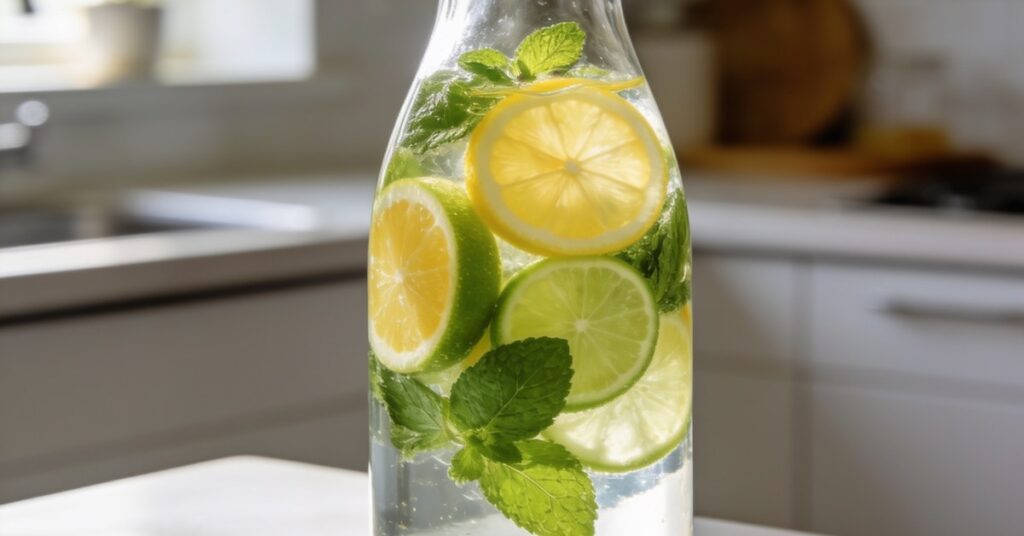
To create a superior drink, simply add fresh ingredients like lemon, lime, orange, or grapefruit to your water for a natural Vitamin C boost. For digestive support, adding fresh ginger or mint is an excellent way to turn a simple drink into a functional health tool. As published in guidance from Emory Healthcare on May 15, 2025, you can achieve a much bolder, more satisfying flavour by following this simple process:
- Wash your fresh fruit or herbs thoroughly to remove any pesticides.
- Slice your ingredients thinly to increase surface area for infusion.
- Place them in a glass pitcher or your favourite water bottle.
- Fill with filtered water and let it steep in the refrigerator overnight.
Frequently Asked Questions
Does the temperature of the water affect the infusion quality?
Yes, steeping ingredients in cold water inside the refrigerator is the best method for a clean, crisp flavour. Using hot water can cause the fruit to break down too quickly, potentially making the water bitter or cloudy.
Can I reuse the fruit in my infused water?
It is generally not recommended to reuse the fruit for more than one batch of water. After sitting in water for 24 hours, the fruit loses its flavour and can begin to degrade, which may affect the freshness of your drink.
How can I tell if a brand uses hidden sweeteners?
Always inspect the back of the label for ingredients ending in „-ose” or specific names like aspartame and acesulfame K. If the list is unnecessarily long or includes „flavour enhancers,” it is likely that the product contains synthetic additives that you should avoid.
Is sparkling water inherently worse than still water for my teeth?
Sparkling water is generally safe, but its carbonation can make it slightly more acidic than flat water. However, the real danger arises when manufacturers add sugars and citric acid to that sparkle, which significantly increases the risk of enamel erosion.
Many readers often query is flavoured water good for you when transitioning to a cleaner lifestyle, but the reality is that nothing beats the simplicity of pure, filtered water. Important: Prioritise natural fruit infusions over commercial products to protect your dental health and avoid the systemic risks associated with synthetic additives.