Optimising your daily nutrition is a cornerstone of achieving lasting physical vitality and mental clarity, yet navigating the confusion between Apple Cider and Apple Cider Vinegar often leads to wasted effort. In this guide, I will break down exactly how these two products differ, how to use them safely in your kitchen routine, and how to harness their potential without compromising your health. You will walk away with the practical knowledge needed to make informed choices that align with your personal wellness goals.
The primary difference between these two products is that Apple Cider is a non-alcoholic, raw, unfiltered juice made from crushed whole apples, whereas Apple Cider Vinegar is a fermented product containing acetic acid. Apple Cider acts as a nutrient-dense beverage rich in vitamins, minerals, pectin, and natural sugars, typically found in the refrigerated juice aisle. Conversely, Apple Cider Vinegar is a pantry staple that undergoes a complex transformation, resulting in a sharp, acidic liquid often featuring the „mother”—a beneficial web of bacteria and enzymes.
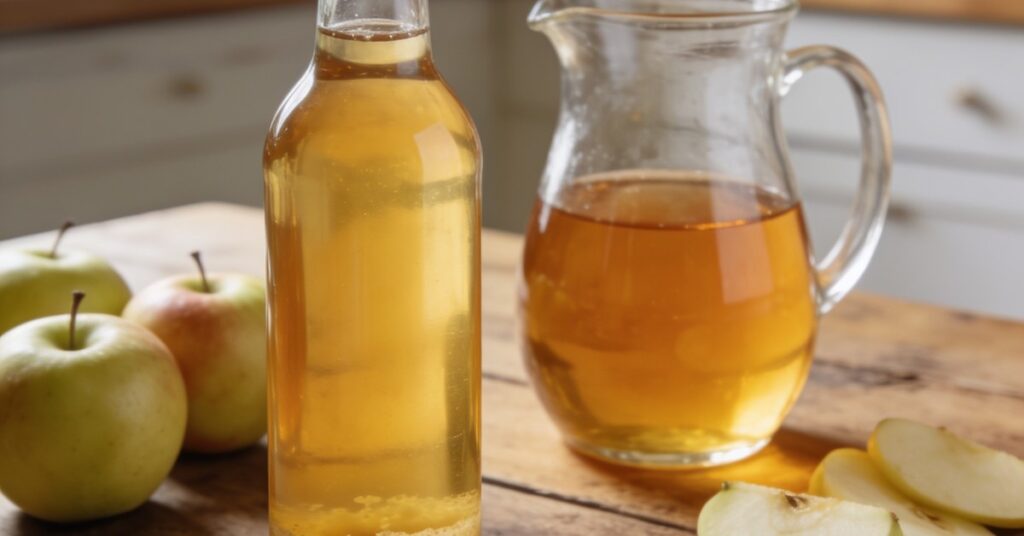
Apple cider and apple cider vinegar
Distinguishing between apple cider and apple cider vinegar
Although they originate from the same primary source, apple cider and apple cider vinegar represent distinct stages of the fermentation process. In its most basic form, apple cider is simply raw or minimally fermented apple juice. Apple cider vinegar, by contrast, is the result of a secondary bacterial fermentation, during which the alcohol present in the cider is transformed into acetic acid.
Regional variations in terminology
Understanding these terms requires awareness of geographical differences in naming conventions:
- In the United States, apple cider is commonly understood as unfiltered, non-alcoholic apple juice.
- Conversely, in the United Kingdom and across Europe, the term cider almost exclusively denotes an alcoholic, fermented apple beverage.
Defining apple cider vinegar
Apple cider vinegar, also known simply as cider vinegar, is produced through a double fermentation cycle. Its primary characteristic is a high concentration of acetic acid. When purchasing, look for raw, unpasteurised versions that contain the „Mother”—a natural substance composed of beneficial bacteria and enzymes. It is important to note that regular apple vinegar is not identical to apple cider vinegar; they differ significantly in their acidity, flavour profiles, and nutritional content.
Safety and consumption guidelines
Due to its high acidity, apple cider vinegar should be handled with care to avoid damage to tooth enamel or irritation of the digestive tract. To consume it safely, consider the following precautions:
- Limit your intake to no more than one serving per day.
- Always dilute the vinegar in water, tea, or other beverages before drinking.
- Consult professional advice if you have concerns regarding its acidity or interaction with specific health conditions.
How Apple Cider and Apple Cider Vinegar are Crafted
Production methods set these two apart, with Apple Cider requiring simple mechanical extraction and Apple Cider Vinegar demanding a rigorous two-stage biological process. Apple Cider is created by washing, crushing, and pressing fresh apples to capture the raw, unfiltered juice. Because this process involves no fermentation, it remains entirely non-alcoholic and must be handled as a perishable fresh food product.
| Feature | Apple Cider | Apple Cider Vinegar |
|---|---|---|
| Primary State | Non-alcoholic juice | Fermented liquid |
| Key Ingredient | Raw apple juice | Acetic acid |
| Storage | Refrigerator | Room temperature |
The creation of Apple Cider Vinegar is a more intensive procedure that relies on two distinct stages of fermentation. First, yeast acts upon the natural sugars in the base cider to convert them into alcohol. Second, specific acetic acid bacteria are introduced to transform that alcohol into the final vinegar, which requires a minimum of 5% alcohol content in the fermentation base to succeed.
Navigating Substitutions for Apple Cider and Apple Cider Vinegar
You cannot use Apple Cider and Apple Cider Vinegar interchangeably in recipes because they possess vastly different chemical compositions and flavour profiles. Ever found yourself staring at a recipe halfway through only to realise you are missing an ingredient? If you are baking and find yourself without Apple Cider Vinegar, use these strategies:
- Citric acid substitute: Mix 1/8 teaspoon of citric acid with 1 tablespoon of water.
- Lemon juice: Use fresh lemon juice as a direct 1:1 replacement in baking.
- Salad dressings: Swap in white wine vinegar for a similar acidic punch.
Avoid the common mistake of using Apple Cider Vinegar as a direct replacement for Apple Cider, particularly in delicate baking tasks like muffins, as the acidity will ruin the texture and flavour. Because Apple Cider Vinegar is a medium-sharp ingredient, it is designed to add tang and depth, whereas Apple Cider provides sweetness and body. Always stick to the specific requirements of your recipe to ensure your nutritional prep turns out exactly as intended.
Assessing the Health Potential of Apple Cider and Apple Cider Vinegar
The active compound in Apple Cider Vinegar is acetic acid, which may offer tangible benefits such as improved cholesterol and triglyceride levels, alongside its ability to delay gastric emptying. By slowing down how quickly food leaves your stomach, it can assist in managing hunger and blood sugar response. However, you must be cautious if you have a history of gastric ulcers or acid reflux, as the high acidity may aggravate these conditions.
Important: Never consume Apple Cider Vinegar straight, as the undiluted liquid is aggressive enough to burn the sensitive tissues of your oesophagus. By integrating this practice mindfully, you can leverage its metabolic benefits while keeping your digestive system safe and comfortable.
Establishing Safe Daily Habits for Apple Cider and Apple Cider Vinegar
To safely incorporate this into your lifestyle, follow this simple process each day:
- Measure 1 to 2 tablespoons of Apple Cider Vinegar.
- Pour into at least 8 ounces of water to properly dilute the acidity.
- Drink it slowly to avoid stomach upset.
Research indicates that this dosage is safe for up to 12 weeks of consistent use. From my experience, consistency beats intensity; you do not need to overdo it to see benefits. Protecting your dental health is equally critical when making this a daily habit, as undiluted vinegar can erode tooth enamel. Treat this supplement as a tool for health optimisation rather than a cure-all, and always listen to your body’s response.
Best Practices for Proper Storage
Proper storage is the final piece of the puzzle to ensure your products remain potent and safe for consumption. Apple Cider is a highly perishable item that must be kept in the refrigerator at all times; once opened, it has a limited shelf life of 7 to 10 days. Always check the seal and consume it promptly to avoid spoilage.
Apple Cider Vinegar is far more stable but still requires specific conditions to maintain its quality for up to two years. Store it at room temperature in a cool, dark place away from direct sunlight, ensuring the container is airtight and the lid is tightly closed. Crucially, avoid storing vinegar in metal containers, as the acidity can react with the material; use glass or food-grade plastic instead to preserve the integrity of the product.
Frequently Asked Questions
Does the quality of the apples used change the vinegar?
Yes, higher quality, organic apples generally produce a more nutrient-dense vinegar. Using fresh, whole fruit ensures that the fermentation process has the best possible foundation for developing beneficial enzymes.
Can I mix Apple Cider Vinegar with smoothies?
Certainly, adding a tablespoon to a smoothie is an excellent way to mask the sharp flavour while still gaining the metabolic benefits. Ensure you blend it well with other ingredients to maintain a palatable consistency.
Is there a specific time of day to consume it?
Many people find that taking it before a main meal helps with satiety and blood sugar regulation. However, the most important factor is consistency rather than the specific time of day.
Does it matter if the vinegar is filtered or unfiltered?
Unfiltered vinegar contains „the mother,” which is rich in beneficial bacteria and enzymes. While filtered versions are cleaner in appearance, the unfiltered variety is generally preferred for its additional health-supporting properties.
Mastering the distinction between these two products allows you to utilise them effectively for their unique nutritional and culinary purposes. Always remember to dilute your vinegar in a full glass of water to protect your health while you work toward your wellness goals.