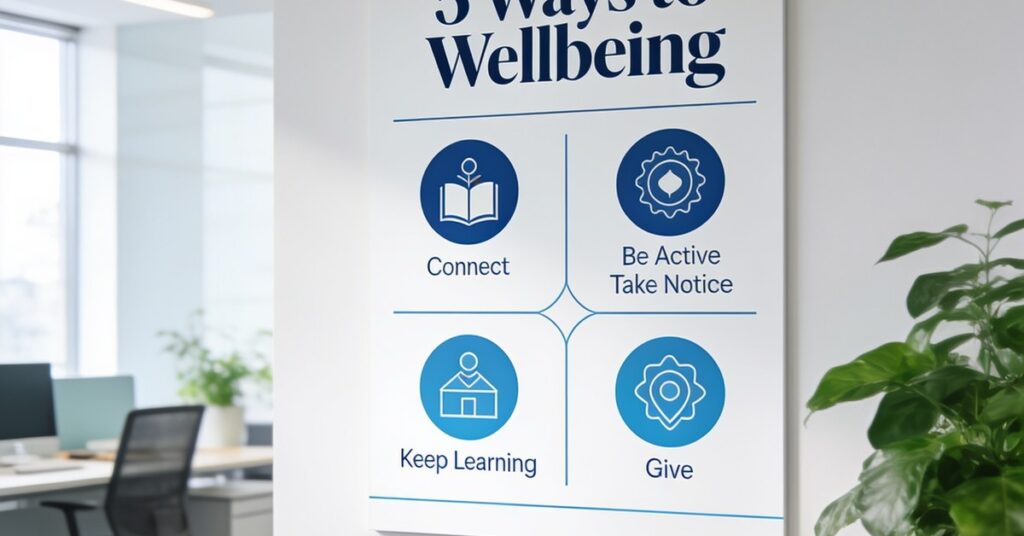
Navigating the pressures of modern life often leaves us searching for a clear, actionable path to better mental clarity and sustained personal growth. In this guide, I will walk you through how to use the 5 Ways to Wellbeing Poster framework to create effective, evidence-based visual prompts that keep your health goals front and centre. You will learn exactly how to design, source, and strategically display these resources to transform your environment into a tool for lasting positive change.
A 5 Ways to Wellbeing Poster is a visual tool designed to remind individuals to engage in five core pillars—Connect, Be Active, Take Notice, Keep Learning, and Give—to improve their mental health and daily resilience. These posters function as a daily nudge, helping you move from passive awareness to concrete action by keeping science-backed habits visible in your personal or professional space.
Understanding the Five Core Pillars of Wellbeing
At the heart of any effective mental health initiative lies the research conducted by the New Economics Foundation, which identifies these five specific actions as the keys to psychological health. By distilling these complex concepts into a visual format, a poster serves as a constant, gentle prompt to integrate these habits into your daily routine, providing a scientifically backed roadmap for personal development.
Practical Strategies for Creating Impactful 5 Ways to Wellbeing Poster Designs
You create an effective poster by combining high-contrast colour palettes, such as clean blues and whites, with actionable, local examples rather than vague, abstract advice. To ensure your design is professional, use platforms like Canva or Adobe Express, which offer specific templates—including Isabelline and Charcoal Structured Duotone Portrait layouts—to guarantee your message is both legible and aesthetically pleasing.
Essential Elements for Your Poster Layout
Your poster must include visual icons for each of the five pillars, accompanied by short, punchy sentences and bullet points to ensure the information is absorbed quickly by the reader. This layout should credit the New Economics Foundation as the primary research source, ensuring the content is perceived as authoritative and credible.
Tools and Templates for Quick Deployment
If you prefer to bypass the design process, the Charlie Waller Trust provides a comprehensive seven-page poster pack that includes individual sheets for each of the five ways, plus two all-in-one designs. These resources, available in PDF format, are teacher-created and ready-to-print, making them ideal for immediate use in schools or offices without extra effort.
Where to Source Free Printable 5 Ways to Wellbeing Poster Resources
You can obtain reliable, high-quality materials from the Betsi Cadwaladr University Health Board, which offers free downloadable A4 posters, A5 flyers, and bilingual Five Ways Pledge Cards. These resources are designed to be accessible, ensuring that anyone can print and display them immediately to start fostering a culture of health and wellbeing.
Integrating Wellbeing Posters into Professional and Educational Environments
The most effective way to use these posters is to display them in high-traffic communal areas, such as break rooms, hallways, and even on the back of restroom cubicle doors, where they will capture attention during natural moments of pause. Whether in a school, college, or workplace, these placements ensure that the message of mental health is integrated into the physical fabric of your daily environment.
Tailoring Displays for the Workplace
For a modern office setting, consider innovative layouts such as large-scale graphics overlaid onto moss walls, whiteboards, or biophilic vinyl to create a calming, natural aesthetic. You might also implement a 5C’s of Well-Being Chart featuring five spokes connected to a central circle, or use a modular design with pull-away sections to make the experience tactile and interactive for your team.
Implementing a 90-Day Wellbeing Strategy
To move beyond simple awareness, integrate your posters into a structured 90-day strategy where the first 30 days are dedicated to diagnosing your current baseline. During this period, pull 24 months of absence and turnover data to track progress, using the posters as a visual anchor for your commitment to long-term health improvements within the organisation.
Promoting Mental Health Through Daily Engagement
Posters promote mental health by suggesting specific activities for each pillar, such as joining a local class, learning a new language, taking up a mindful hobby, or writing down three things you are grateful for each day. These resources are highly flexible and can be utilised as email signatures or as part of a healthy family challenge, making them one of the most versatile tools for consistent psychological support, available in 12 languages via the NHS Five Ways to Wellbeing Campaign.
Practical Comparison of Display Methods
| Display Method | Best For | Engagement Level |
|---|---|---|
| Moss Wall Graphic | Premium Office Space | High (Visual Impact) |
| Pull-away Sections | High-Traffic Hallways | Very High (Tactile) |
| PDF Printouts | Schools/Restrooms | Medium (Informational) |
Steps to Getting Started with Your Wellbeing Initiative
- Assess your current environment to identify where a visual prompt would be most effective.
- Download the PDF resources from a trusted source like the Charlie Waller Trust.
- Print your materials using high-quality paper to ensure the cortisol levels of your team aren’t spiked by unprofessional, messy displays.
- Rotate the posters every 30 days to keep the message fresh and engaging.
Important: Always ensure your chosen activities match the culture of your workplace or home; if a suggestion feels forced, it won’t help you lower your stress markers or improve your mood.
Frequently Asked Questions
Can these posters be used to track individual progress over time?
While the posters are primarily designed for awareness, you can use them as a daily checklist to track your personal adherence to the five pillars. Pairing the poster with a simple journal entry allows you to monitor how these small, consistent actions impact your overall mood.
Are there specific design considerations for accessibility?
Yes, ensure your poster uses high-contrast text and accessible font sizes to remain readable for all employees. Using clear icons alongside the text helps those who may process visual information more effectively than long-form written content.
How often should I update the visual content on the walls?
I recommend rotating your displayed materials every month to prevent 'poster blindness,’ where people stop noticing the information due to familiarity. Fresh layouts or updated activity suggestions keep the initiative relevant and encourage renewed interest from the team.
Should I involve employees in the creation of the posters?
Involving your team in selecting the local activities or design style significantly increases ownership and engagement. When employees contribute to the content, they are far more likely to feel a personal connection to the wellbeing initiative.
A 5 Ways to Wellbeing Poster acts as a reliable anchor for your mental health, so ensure you rotate your visual content monthly to maintain genuine engagement. Consistent visibility of these five pillars is the secret to transforming simple intentions into real, manageable lifestyle improvements that truly support your journey.