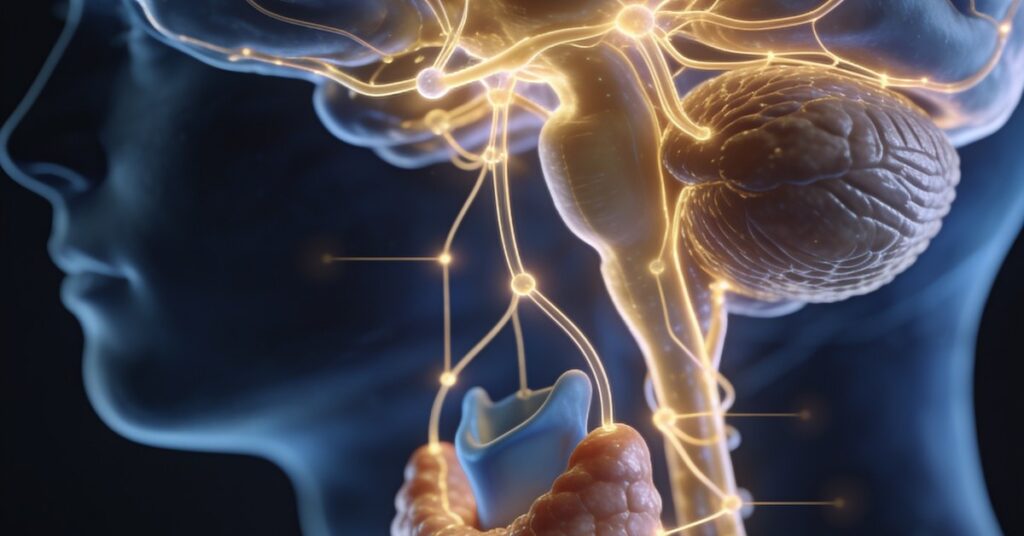
Understanding Thyrotropin Releasing Hormone is essential if you are struggling with unexplained fatigue, weight gain, or mental fog that no amount of coffee or willpower seems to fix. In this guide, I will break down how this master regulator influences your metabolic and neurological health, providing you with the reliable, science-backed insights you need to identify potential imbalances. We will cut through the noise so you can accurately assess your symptoms and take proactive, informed steps toward regaining your vitality.
Thyrotropin Releasing Hormone (TRH) is the fundamental tripeptide—a short chain of three amino acids—that acts as the primary command signal for your body’s metabolic engine. It functions as the master switch in the hypothalamus, specifically produced by the paraventricular nucleus, to initiate a cascade that tells your thyroid how to operate. By stimulating the pituitary gland to release thyroid-stimulating hormone (TSH), TRH governs the speed at which your cells burn energy, effectively setting the pace for your physical performance and overall stamina.
Thyrotropin-releasing hormone
An Overview of Thyrotropin-Releasing Hormone
Thyrotropin-releasing hormone, abbreviated as TRH, is a diminutive peptide hormone synthesised within the hypothalamus. Its fundamental role involves signalling the anterior pituitary gland to secrete thyroid-stimulating hormone (TSH) and prolactin. By initiating the production of TSH, TRH acts as a primary regulator for the body’s metabolic rate, overall energy expenditure, and physical development.
Chemical Composition and Physiological Role
Composed of a simple chain of three amino acids (p-Glu-His-Pro-NH2), TRH functions as the initial messenger within the hypothalamic-pituitary-thyroid (HPT) axis. Its primary physiological contributions include:
- Regulating the synthesis and secretion of thyroid hormones.
- Enhancing heart function by increasing heart rate and cardiac output.
- Facilitating thermogenesis to maintain a stable internal body temperature.
- Governing essential metabolic and growth processes throughout the body.
Diagnostic Applications in Medicine
In clinical practice, a synthetic iteration of this hormone, referred to as protirelin, is utilised as a diagnostic tool. Medical professionals employ the TRH stimulation test to evaluate pituitary gland responsiveness. This diagnostic procedure is instrumental in identifying:
- Potential disorders affecting the pituitary gland.
- Irregularities in thyroid function that require further investigation.
Experimental Research and Future Outlooks
Given that TRH is metabolised rapidly within the human system, clinical researchers have explored stable analogues for therapeutic purposes. These experimental investigations focus on several potential medical applications, including:
- Addressing various neurological pathologies and conditions.
- Assisting in the management of epilepsy.
- Treating spinal cord injuries and instances of spinal shock, based on promising results observed in preclinical animal models.
The intricate feedback loop managed by the hypothalamus ensures that levels of T3 and T4 hormones remain balanced. As a foundational component of the endocrine system, TRH continues to be a subject of significant interest in both established endocrinology and pioneering neurological research.
Understanding Thyrotropin Releasing Hormone: The Master Switch of Your Thyroid
TRH is a potent neurohormone that acts as the primary gatekeeper of your hypothalamic-pituitary-thyroid (HPT) axis, which is the system responsible for maintaining your internal metabolic balance. Because it has a very short biological half-life of approximately two minutes, its signals must be precise and rapid to ensure your body responds appropriately to shifting energy demands. Beyond its endocrine duties, TRH acts as a neurotransmitter in the nervous system, proving that your metabolic health and brain function are deeply interconnected.
In a clinical or pharmaceutical context, the synthetic version of this hormone is known as protirelin. While its primary role is to trigger TSH release, it also stimulates the pituitary to release prolactin, demonstrating its diverse influence on your hormonal profile. By regulating the HPT axis, it keeps your system from running too hot or too cold, ensuring your internal environment remains stable throughout the stresses of daily life.
How Your Body Maintains Metabolic Balance
Your body maintains metabolic balance through a negative feedback loop where the hypothalamus senses circulating thyroid hormone levels and adjusts TRH production accordingly. When your body detects that levels of T3 and T4 are low, the paraventricular nucleus increases TRH secretion to jumpstart the pituitary gland into releasing TSH, which then travels to the thyroid gland to ramp up hormone production. This cycle is the physiological equivalent of a thermostat, ensuring your body doesn’t waste energy or overheat during periods of rest or high activity.
The Cellular Mechanism of Action
At the microscopic level, TRH triggers a specific chemical cascade by binding to G protein-coupled receptors on anterior pituitary thyrotrophs and lactotrophs. This binding activates the Gq signaling pathway, which stimulates phospholipase C (PLC) to cleave PIP2 into two secondary messengers: IP3 and DAG. The IP3 molecule is responsible for releasing intracellular calcium, while DAG activates protein kinase C, a process that ultimately forces the synthesis and release of TSH and prolactin. Interestingly, this mechanism also promotes growth hormone (GH) release specifically in individuals with acromegaly, and the entire process is self-limiting: high levels of T3 and T4 will eventually suppress the thyrotrophs’ responsiveness to further TRH signals.
Recognizing the Signs of Hormonal Imbalance
You can identify an imbalance in your TRH regulation by monitoring for specific, persistent physical symptoms that indicate your metabolic rate has slowed down significantly. If your body isn’t receiving the right signals via the HPT axis, you will likely experience chronic fatigue, unexplained weight gain, or an extreme sensitivity to cold that makes even mild temperatures uncomfortable. Ever found yourself in a similar spot, wondering why your gym gains have stalled despite your best efforts?
| Symptom Category | Common Manifestations |
|---|---|
| Physical | Weight gain, hair loss, dry skin |
| Systemic | Chronic fatigue, muscle weakness, cold sensitivity |
| Psychological | Depression, low mood, poor mental clarity |
Practical Steps to Take When You Suspect an Imbalance
If you suspect something is off with your hormonal health, follow this logical process to get back on track:
- Track your symptoms for at least two weeks to identify consistent patterns.
- Consult a medical professional to request a comprehensive thyroid panel.
- Avoid aggressive „crash diets” that can further stress your HPT axis.
- Focus on consistent sleep and stress management to support endocrine function.
The Connection Between Hormones and Mental Well-being
TRH is directly implicated in your mental clarity and neurological health because it was the first hypothalamic peptide identified as a neurohormone, bridging the gap between your endocrine system and your brain chemistry. Clinical research has shown that depressed patients often exhibit a blunted TSH response to intravenous TRH injection, suggesting that a lack of proper hormonal signaling might be contributing to mood disorders. In hypothyroid adult animals, researchers have observed increased serotonin turnover in the brainstem, which provides a fascinating glimpse into how thyroid-related peptides influence mood regulation and resilience.
The role of TRH extends into neurodegenerative diseases, as it is increasingly implicated in the pathology of Alzheimer’s and Parkinson’s disease. While a single injection of TRH can produce rapid, short-lasting behavioral improvements in depressed patients, it serves as a reminder that your brain is highly sensitive to the chemical signals originating from your endocrine system. Maintaining your hormonal health is, therefore, not just about physical fitness; it is a fundamental pillar of protecting your long-term cognitive health.
Key Factors That Influence TRH Secretion
Your hypothalamus adjusts TRH secretion based on a complex array of internal inputs, ensuring that your hormonal output matches your current physiological state. The most significant factor is the level of circulating free T4, which acts as the primary feedback mechanism to prevent over-stimulation of the thyroid. However, your body also processes other signals, including alpha-melanocyte-stimulating hormone (a-MSH) and Vasoactive intestinal peptide (VIP), both of which can modulate how much TRH is released into the system.
Your lifestyle and internal environment also play a role, as estrogens and various growth factors (GF) can influence the overall sensitivity of the HPT axis. Many guys wonder if cutting out carbohydrates completely is the way to go for weight loss, but from my experience, it’s all about finding a sustainable balance; extreme dietary shifts can sometimes confuse your body’s delicate feedback loops. Understanding that your hormonal balance is a dynamic, multi-input system helps you appreciate why managing stress and nutrition is vital for keeping your hypothalamic signals functioning at their peak.
Clinical Applications and Synthetic Analogs
Synthetic analogs of TRH are used in medicine to diagnose pituitary function and manage specific health conditions, offering a way to bypass natural fluctuations. Protirelin is the standard pharmaceutical-grade TRH used as a diagnostic agent to test the hypophyseal secretion of thyrotrophin, helping doctors pinpoint where a metabolic issue might be originating. Furthermore, TRH is occasionally used adjunctively to help fine-tune thyroid hormone dosage in patients with primary hypothyroidism, ensuring their replacement therapy is perfectly calibrated to their body’s needs.
Important: Always consult with an endocrinologist before considering any form of hormonal supplementation, as the HPT axis is extremely sensitive and requires precise medical oversight to avoid long-term disruption.
Innovative research is also exploring other analogs like Taltirelin, which is marketed under the tradename Ceredist and is already approved for use in humans in Japan. Taltirelin is being investigated for the treatment of spinocerebellar degeneration, and both it and standard TRH have been shown to stimulate breathing via the preBötzinger complex in the brainstem. These clinical applications demonstrate that while TRH is a natural peptide, its synthetic counterparts hold significant promise for treating both neurodegenerative and respiratory challenges.
Frequently Asked Questions
Does exercise intensity influence TRH output?
High-intensity exercise can acutely alter the HPT axis, potentially impacting how the hypothalamus manages TRH release during recovery periods. It is vital to balance your training load to ensure your endocrine system has the necessary downtime to maintain homeostasis.
Can nutritional deficiencies mimic thyroid dysfunction?
Yes, deficiencies in essential minerals like selenium or zinc can impair the conversion of thyroid hormones, creating symptoms that mirror a lack of TRH signaling. Ensuring a nutrient-dense diet is a foundational step in supporting your metabolic health.
Are there seasonal patterns to hormone regulation?
Some evidence suggests that exposure to extreme cold or changes in light can influence the hypothalamus, potentially modulating TRH secretion to help the body adapt. This is why maintaining a stable daily routine is so important for long-term hormonal consistency.
How does sleep deprivation impact the hypothalamic-pituitary-thyroid axis?
Lack of quality sleep acts as a chronic stressor, which can blunt the responsiveness of the pituitary gland to TRH and disrupt the natural circadian rhythm of hormone production. Prioritising seven to nine hours of rest is the simplest way to protect your endocrine function.
Prioritizing consistent sleep and stress mitigation is the most effective way to keep your endocrine system balanced and your metabolism firing optimally. Always consult with a qualified medical professional to interpret your health data before making any significant changes to your wellness regimen.