Building a powerful, stable upper body is not just about aesthetics; it is essential for long-term shoulder health and functional strength. In this guide, you will learn the exact techniques to activate and strengthen your Serratus Anterior, ensuring you have the reliable knowledge to avoid injury and maximise your training results. Follow these proven methods to take control of your physical development and bulletproof your shoulders for the challenges ahead.
The Serratus Anterior is the primary muscle responsible for scapular protraction and upward rotation, acting as the crucial link between your rib cage and your shoulder blades. To effectively train this area, you must prioritise movements that force the shoulder blades to wrap around the torso, rather than just pulling them back. By mastering these specific patterns, you ensure that your shoulders remain stable under load, preventing the common „winged scapula” effect and enhancing your overall pushing power. A well-structured Serratus Anterior Workout serves as the foundation for this stability, bridging the gap between basic lifting and true functional mastery.
Serratus anterior workout
Understanding and Engaging the Serratus Anterior
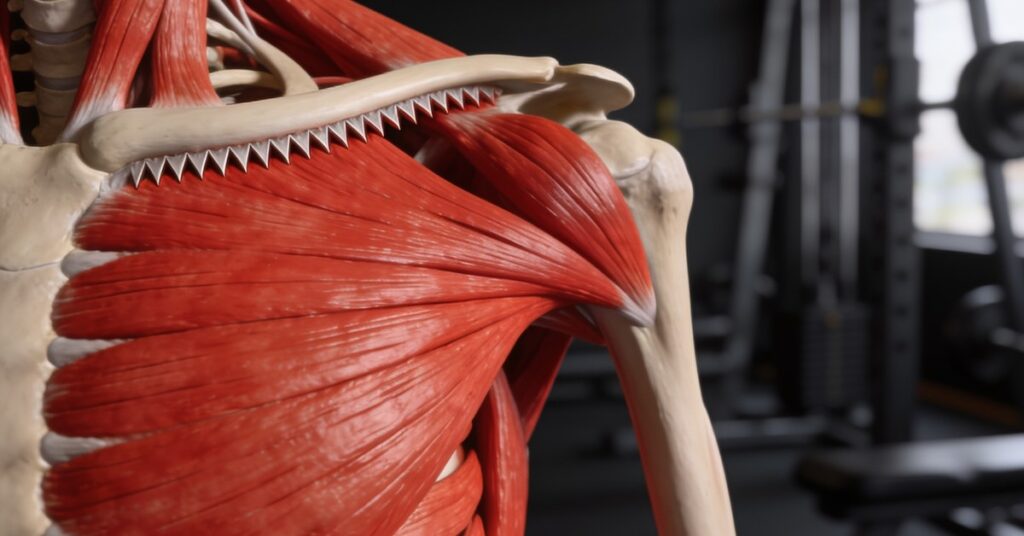
To effectively target the serratus anterior, you must prioritise movements that focus on scapular protraction and upward rotation. The anatomy of this muscle is unique, as it originates from the first to the eighth ribs along the lateral aspect of the rib cage and inserts onto the anterior surface of the scapula. This specific placement is why boxers, who frequently utilise punching motions, often develop highly defined serratus anterior muscles.
Engaging this muscle can be challenging for many athletes. However, by intentionally rounding your shoulder blades, you can better isolate and feel the contraction. Consistent training of this area not only improves aesthetic definition but also enhances shoulder capacity and builds tolerance for various overhead positions.
Recommended Training Routine
When incorporating these exercises into your programme, it is sensible to begin with the most accessible movements and progressively advance to more challenging variations. For optimal results, aim to perform three sets of ten repetitions, three times per week. Additionally, integrating static holds can be beneficial for stability.
- Scapular Push-Ups serve as a foundational movement for mastering shoulder blade control.
- Overhead arm variations are highly effective, as increasing the arm angle above the shoulder joint naturally demands greater activation from the serratus anterior.
- For those focusing on mobility and tension, hold the peak contraction or stretched position for thirty seconds, ensuring you breathe slowly and deeply to facilitate muscle relaxation and recovery.
Key Benefits of Serratus Training
Integrating these specific movements into your regimen offers several advantages:
Firstly, you will significantly improve your overall shoulder health by enhancing the synergy between the ribs and the shoulder blades. Secondly, increasing your tolerance for overhead positions will pay dividends in functional strength and injury prevention. By consistently applying these exercises, you will gradually improve your performance in any upper-body-focused athletic discipline.
Proven Exercises for Serratus Anterior Hypertrophy and Strength
You can stimulate significant growth in the Serratus Anterior by performing 3-4 sets of 10-15 repetitions of exercises that emphasise the „plus” or protracted phase of a movement. Incorporate the Push-up Plus and Scapular Push-ups into your routine as foundational movements, as these specifically target the muscle through its full range of protraction. To add variety and increased intensity, use the Plank Plus, Boxer’s Punch Plus, and Cable Serratus Punches to maintain constant tension on the lateral rib cage.
Ever found yourself wondering if you’re actually hitting the muscle or just moving weight? From my own experience, it is easy to „cheat” the movement by using your arms rather than your shoulder blades. Here is a quick comparison to help you choose the right approach for your session:
| Exercise Type | Best For | Primary Focus |
|---|---|---|
| Push-up Plus | Beginners/Warm-up | Scapular Protraction |
| Cable Punches | Hypertrophy | Constant Tension |
| Dumbbell Pullovers | Mobility & Stretch | Full Range of Motion |
When you commit to a dedicated Serratus Anterior Workout, you are essentially teaching your body how to move the scapula independently of the rib cage. This is not just about looking good in a vest; it is about longevity. By focusing on the „plus” phase, you force the muscle to work harder than it would during a standard press, leading to better definition and superior joint health. Consistency over the course of several weeks will reveal that the serratus is not just a secondary muscle, but a primary driver of your upper body pushing performance.
Techniques for Precise Neuromuscular Activation
The most effective way to activate your Serratus Anterior is to perform closed chain movements, such as push-ups, planks, downward dogs, or handstands, which force the muscle to stabilise the scapula against the ground. Follow these steps to ensure you’re firing the right muscles before you start your heavy sets:
- Elevate your shoulder to 120 degrees of flexion and 30 degrees of horizontal abduction.
- Perform foam rolling under the armpit to loosen tight fascia.
- Hold an anterior scapular tilt for 5–10 seconds to prime the neural pathway.
- Focus on pushing your shoulder blades around your rib cage during the movement.
Remember: The mind-muscle connection is not just gym-bro talk; it is a physiological necessity for engaging the Serratus Anterior effectively. If you cannot feel the muscle working, drop the weight and focus purely on the quality of the protraction.
Avoiding Common Training Pitfalls in Serratus Anterior Training
You can prevent common shoulder injuries and training plateaus by strictly avoiding over-extending the lower back and failing to protract the shoulder blades during your movements. Many lifters inadvertently shrug their shoulders to compensate for a lack of upward rotation, which places excessive stress on the upper traps and neck. If you find yourself shrugging or feeling shoulder internal rotation during a movement, stop, reset your posture, and focus on keeping your shoulder blades flat against your rib cage.
Furthermore, never rush into heavy overhead lifts without first establishing proper neuromuscular activation, as this often leads to poor form and joint discomfort. Lifting too high or with an improper angle can cause impingement within the shoulder joint, which signals that your mechanics are misaligned. By consciously avoiding these errors, you protect your joint health and ensure that the Serratus Anterior is actually doing the work it was designed to do.
Best Serratus Anterior Stretches and Mobility Drills
To improve your Serratus Anterior mobility and overall shoulder health, integrate daily drills such as the Child’s Pose, Modified Push Up Plus, and Scapular Pull-ups. These movements help keep the scapulae fluid and ensure the surrounding tissues do not become overly tight. Before you start, make sure you have the basics ready:
- A reliable workout plan that includes at least two serratus-specific movements.
- A foam roller for pre-workout tissue preparation.
- A resistance band for unilateral banded chest press drills.
Consistency with these mobility drills is what separates those who stay injury-free from those who suffer from chronic shoulder pain. By dedicating time to these drills, you facilitate better shoulder blade movement and ensure that your Serratus Anterior remains resilient and capable of handling the demands of your training programme.
Frequently Asked Questions
Does the Serratus Anterior play a role in breathing?
Yes, the Serratus Anterior acts as an accessory muscle of respiration by helping to lift the ribs during deep inspiration. This makes it a multi-functional muscle that supports both your athletic performance and your daily respiratory mechanics.
Can I train the Serratus Anterior if I have existing shoulder pain?
You should approach this with caution and consult a healthcare professional first, as pain often indicates underlying inflammation or structural issues. If cleared, focus exclusively on low-load, high-control mobility drills like wall slides rather than aggressive pushing movements.
Is the Serratus Anterior involved in pulling movements?
The primary function of the Serratus Anterior is protraction, which is the opposite of the retraction required in most pulling movements. However, it still acts as a stabiliser for the scapula during the end range of motion in exercises like rows or pull-ups.
What indicates that my Serratus Anterior is weak?
A primary indicator is a „winged scapula,” where the inner edge of your shoulder blade protrudes significantly away from your back. Additionally, if you struggle to maintain shoulder stability during heavy pressing, it is a clear sign that your serratus requires targeted strengthening.
Regularly prioritising the „plus” phase of every push-up movement will ensure your shoulder blades glide smoothly around your rib cage, effectively bulletproofing your joints for the long haul. Keep your form sharp and your focus consistent to turn your Serratus Anterior Workout into the ultimate tool for enduring shoulder health and strength.