Building a rock-solid core is the cornerstone of long-term physical resilience and is essential for protecting your spine during every heavy lift or daily movement. In this guide, I will break down the mechanics of the Dead Bug Exercise, providing you with the reliable, expert-backed techniques you need to master the form and avoid common pitfalls. You will learn exactly how to integrate this movement into your routine to transform your stability and finally move with the strength and confidence you deserve.
The Dead Bug Exercise is a highly effective, low-impact core stability movement that involves lying on your back and moving opposite limbs to challenge your abdominal muscles while keeping your spine neutral. By engaging your core, you create a stable foundation that protects your back from injury, making it an essential practice for anyone looking to build functional strength without the strain often associated with traditional sit-ups or crunches. If you have been struggling with a weak midsection or lower back discomfort, this movement acts as a reset button for your entire postural chain, teaching your nervous system how to maintain tension while your limbs are in motion.
Dead bug exercise
Mastering the Dead Bug Movement
The dead bug is an exceptional, lumbar-friendly drill designed to refine core stability and motor coordination. To begin, lie supine on an exercise mat, ensuring your spine remains neutral. Extend your arms towards the ceiling and flex your hips and knees at ninety-degree angles. Crucially, press your lower back firmly into the floor throughout the duration of the movement to maintain engagement.
Step-by-Step Execution
Once you are positioned correctly, the movement involves a controlled, reciprocal action:
- Slowly lower your contrary arm and leg simultaneously until they hover just millimetres above the floor.
- Ensure your torso remains entirely still; only the moving limbs should deviate from the starting position.
- Return your extremities to the initial overhead and upright stance with deliberate control.
- Repeat the pattern on the opposite side to balance your core development.
Core Strengthening Variations
To further challenge your midsection, consider incorporating these targeted modifications:
- Heel Taps: Maintain a fixed knee angle while slowly lowering one foot to tap the floor with your heel, then returning it to the starting position.
- Leg Extensions: Extend one limb fully while preserving spinal alignment, focusing on the resistance provided by your deep abdominal muscles.
Common Pitfalls to Avoid
To maximise the efficacy of the exercise and prevent potential discomfort, you should be mindful of these frequent errors:
- Lifting the lumbar spine away from the floor surface during the extension phase.
- Accelerating the pace of the repetitions; speed reduces the time under tension for your core.
- Losing focus on rib cage positioning, which should remain pulled down towards your pelvis to protect the lower back.
Key Form Requirements
Achieving proper form is essential for safety and optimal results. Always prioritise technique over the number of repetitions completed. Ensure your arms stay perpendicular to the ground, and your deep core stays braced throughout the entire range of motion as you perform this foundational movement.
How to Execute the Perfect Dead Bug Exercise
You can master the movement by following these precise steps to ensure you maintain tension where it matters most, as proper form is non-negotiable for safety and results:
- Lie flat on your back on an exercise mat, ensuring your head and shoulders are relaxed and your neck is not strained.
- Extend your arms straight toward the ceiling, keeping them perpendicular to the ground to establish a firm vertical line.
- Bend your hips and knees at a 90-degree angle, lifting your feet off the floor so your shins are parallel to the ceiling.
- Press your lower back firmly into the floor; if you can slide a hand under your spine, you aren’t engaging your deep core muscles enough to protect your vertebrae.
- Lower your opposite arm and leg simultaneously until they hover just above the floor, maintaining a slow and deliberate pace.
- Return slowly to the starting position with total control and repeat the movement on the opposite side to balance your workload.
Why the Dead Bug Exercise is a Game Changer for Core Strength
The Dead Bug Exercise provides exceptional benefits by targeting all four major abdominal muscle groups while limbs are in motion, which forces the core to stabilise the spine against external tension. This movement is highly recommended by Yasaman Zarbafian, an orthopedic clinical specialist and physical therapist at Massachusetts General Hospital, specifically for its ability to provide stability around the spine to protect the lower back from the shear forces common in other exercises. Furthermore, it is identified by Harvard Health as a key core exercise for older adults, and it is highly effective at supporting the hip flexors, ensuring that your midsection functions as a cohesive, powerful unit during any athletic endeavour or daily task. When you perform this movement, you are not just working for aesthetics; you are training your body to remain rigid and powerful under load, which translates directly to better performance in the gym and less fatigue during your daily commute or work hours.
Muscles Targeted During the Dead Bug Exercise Movement
This exercise fires up your entire midsection, but it is worth knowing exactly what is working under the hood, as understanding the anatomy helps you focus your mind-muscle connection during each repetition:
| Muscle Group | Primary Function in Dead Bug Exercise |
|---|---|
| Rectus abdominis | Stabilises the trunk and prevents unwanted arching. |
| Transverse abdominis | Acts as a natural corset for deep core support and protection. |
| Obliques | Manages rotational stability during independent limb movement. |
| Multifidus & Erector spinae | Maintains spinal alignment and keeps your posture upright throughout the day. |
Avoiding Common Technical Pitfalls in the Dead Bug Exercise
You can avoid common technical pitfalls by prioritising spinal contact with the floor, as the most frequent mistake is arching the lower back away from the surface, which places undue stress on the lumbar region. Ever found yourself wondering why your back hurts after a core session? It is usually because you are moving too quickly or breathing improperly. To stay on track and ensure you are getting the most out of every training session, keep this checklist in mind to keep your form tight:
- Control the tempo: Slow down; this isn’t a race to the finish line, so focus on the eccentric phase of the movement.
- Keep the head down: Lifting your neck creates unnecessary tension in the cervical spine and detracts from core engagement.
- Watch the limbs: Avoid drifting arms or sinking your legs too low if you lose form, as this shift in weight can cause your pelvis to tilt incorrectly.
Progressive Variations for Every Fitness Level
Beginners can progress through the Dead Bug Exercise by starting with simple heel and hand taps to the floor one at a time, eventually working up to moving the opposite arm and leg simultaneously. Once you have established a solid foundation in the 90/90 position—with knees over hips and arms in front of shoulders—you can increase the difficulty by using extended lever arms or the serratus reach to heighten the challenge. For advanced athletes, you might incorporate isometric tension, loop a mini resistance band around both feet for extra feedback, or add external weight to push your core stability to new heights. I have found that adding a light dumbbell in each hand, even just a few kilograms, significantly increases the demand on your transverse abdominis, forcing it to work harder to keep your back pressed into the floor.
Dead Bug Exercise Versus Planks: Which Should You Choose?
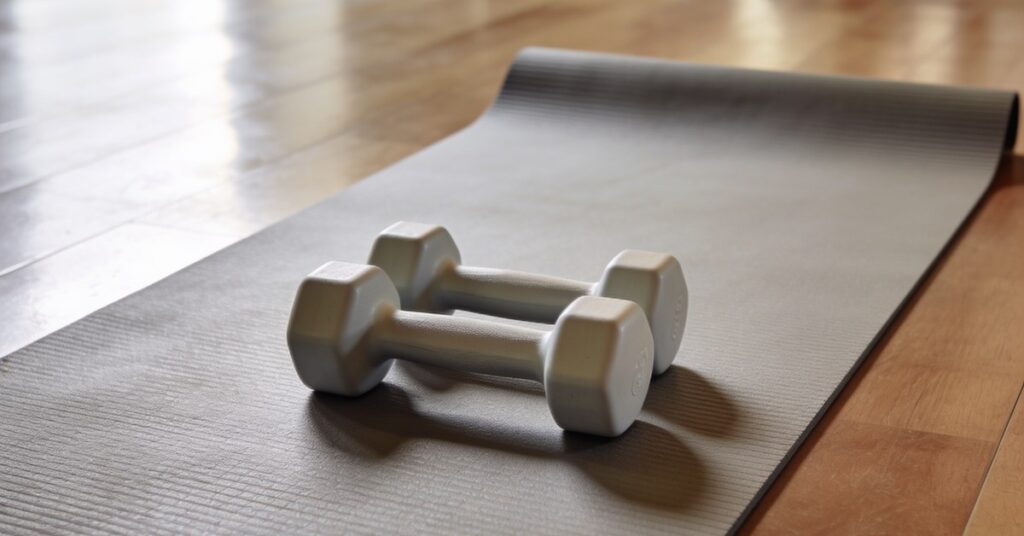
Choosing between dead bugs and planks depends on your specific needs, as dead bugs target deep abdominal muscles while protecting the lower back, whereas planks utilise static holds to build full-body tension and endurance. I know many guys prefer planks because they feel „tougher” and more „manly” since they are static challenges, but from my experience, the Dead Bug Exercise is a superior, back-friendly alternative if you want to bulletproof your spine and improve your coordination. Research by I. Tsartsapakis (2024) found no significant difference in deep core muscle thickness between dead bugs, bird dogs, side planks, and beast crawls, proving that the dead bug is just as effective as other popular movements. While a plank requires only your body weight, dead bug intensity can be further increased using light dumbbells, and the only equipment you need is a yoga mat or a bit of floor space.
Important: Always ensure your lower back remains in contact with the floor throughout the entire movement; if you feel your back arching, decrease your range of motion until you have the strength to maintain control.
Frequently Asked Questions
Can the Dead Bug Exercise help with back pain?
Yes, this movement is excellent for managing back pain because it teaches your core to stabilise the spine while your limbs move independently, effectively retraining your body to keep the lumbar spine protected during dynamic activity.
How often should I perform this exercise?
You should aim to perform this exercise 3 to 4 times per week as part of your core-specific training sessions or as a foundational movement during your daily warm-up to ensure consistent progress.
Do I need any equipment for this workout?
You do not need complex equipment to perform this exercise; a simple yoga mat or any flat floor space is sufficient, though light dumbbells can be added later to increase intensity.
Is the Dead Bug Exercise suitable for beginners?
This movement is highly suitable for beginners, provided they start with the basic heel-tap variation to build the necessary coordination and strength before attempting more advanced, simultaneous limb movements.
Mastering the art of keeping your spine neutral while your limbs move independently is the ultimate secret to a functional and pain-free core. Always focus on pressing your lower back firmly into the floor during every repetition to ensure you are building genuine strength rather than just going through the motions.